WK8: | Why Your Raid Log Is Not A Risk Management System

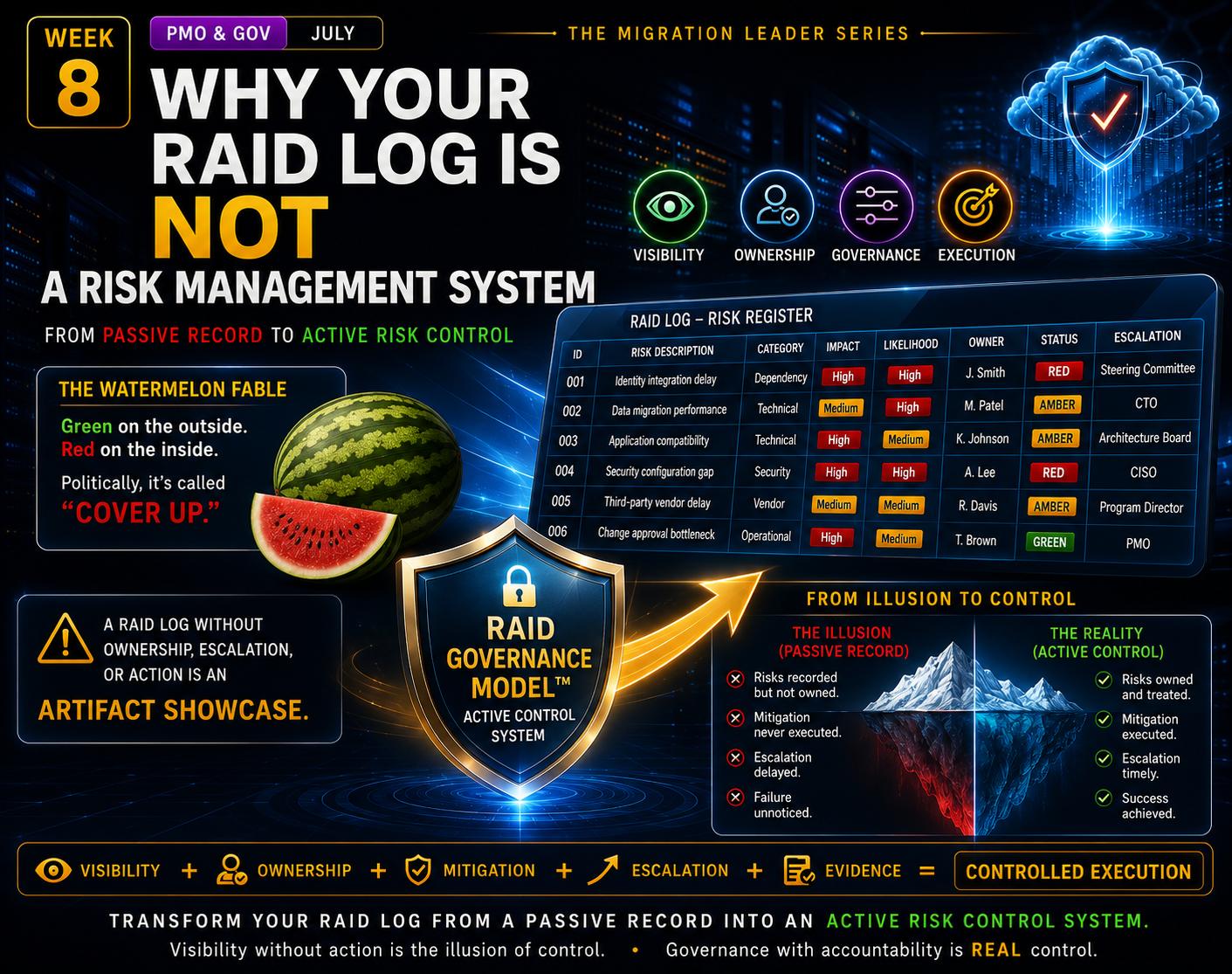
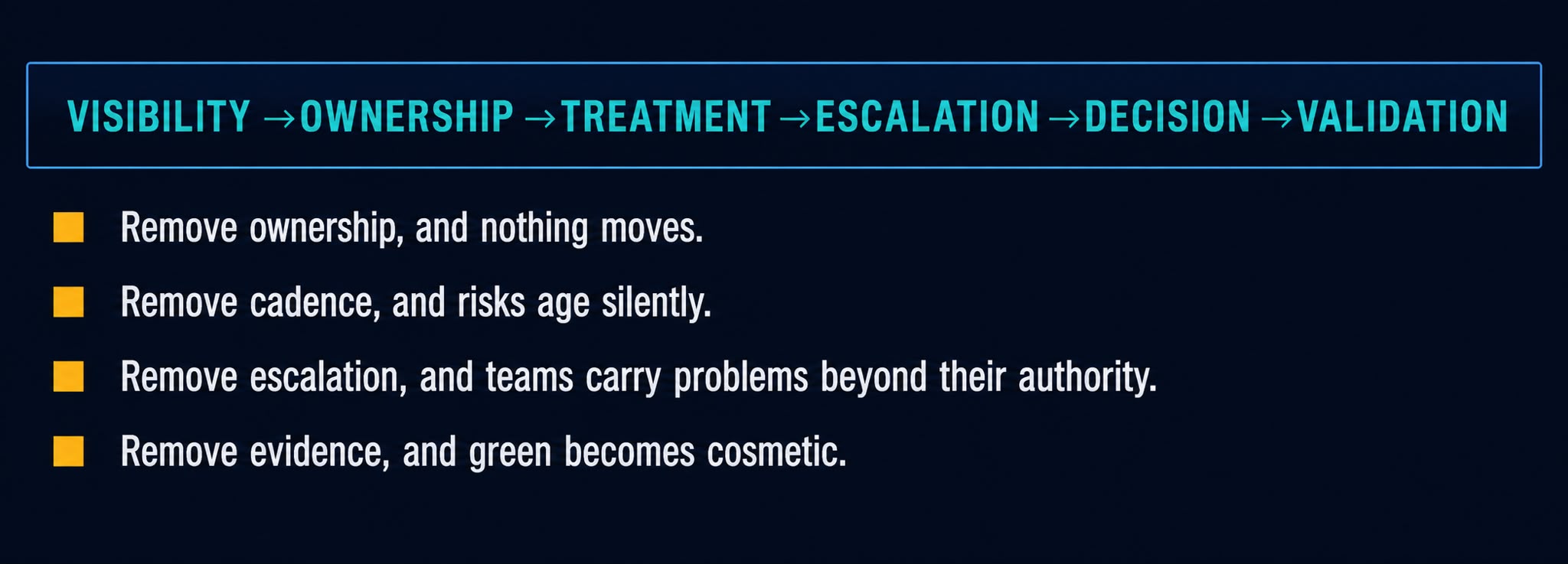
“Risks unmanaged become greater risks.” The RAID Governance Model™ turns documentation into decisive control: Visibility • Ownership • Governance • Execution Visibility + Ownership + Mitigation + Escalation + Evidence = Controlled Execution Transform your RAID log from a passive record into an active risk control system. Visibility without action is the illusion of control. Governance with accountability is real control.

The Problem
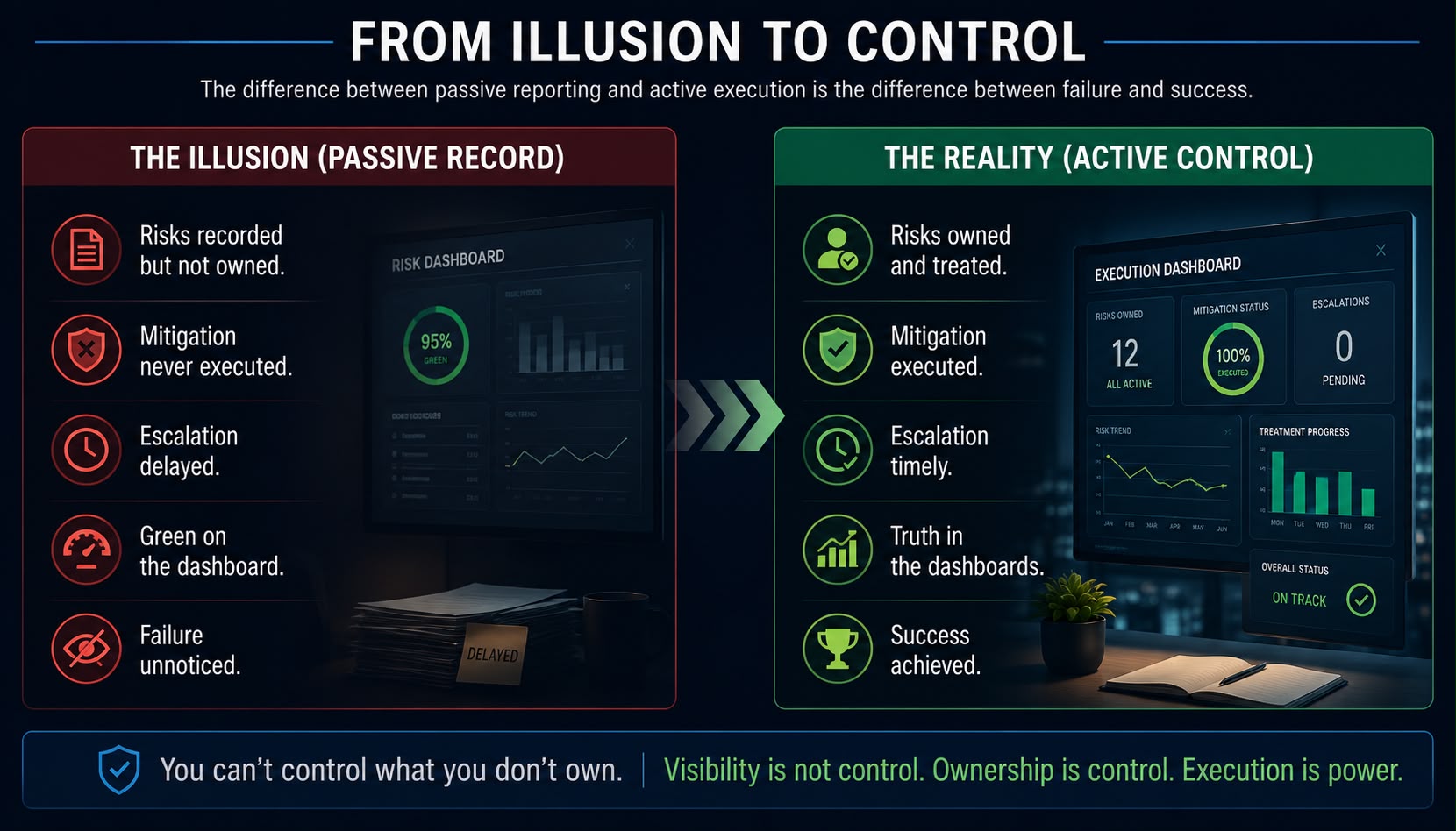
A RAID Log Can Be Completely Updated — and the Project Can Still Be Failing
A RAID log with 200 entries, no accountable owners, outdated mitigation dates, and no escalation path is not risk management. It is documentation of neglect.
The spreadsheet may be polished. The status column may be green. The governance presentation may look reassuring. Yet beneath that surface, critical dependencies remain unresolved, assumptions remain untested, and risks continue to increase in severity.

The external presentation communicates confidence. The internal operating condition reveals exposure. When leaders knowingly preserve the green appearance after the evidence has turned red, the problem is no longer weak reporting. Politically, it begins to resemble a cover-up. Operationally, it becomes an artifact showcase — the display of governance documents without the exercise of governance.

The Cloud Migration PM Bible™ states that governance must ensure risks are not hidden and progress is not merely assumed. Progress must be measured, validated, and actively managed. It defines governance through clarity, accountability, and control — not through the existence of documents. (Chapter 9, pp. 327–328)

A future event becomes an immediate threat. An assumption becomes a contradiction. A dependency becomes a blocker. A blocker becomes an issue. An issue becomes an incident. An incident becomes executive accountability.
The book illustrates this through a Microsoft 365 implementation in which security concerns, identity dependencies, and operational gaps were actively discussed — but nothing moved. There was no ownership, mitigation path, escalation model, or cross-functional alignment. The predictable results were confusion, delay, and exposure. (Chapter 9, pp. 329–331)
The Diagnostic Foundation
The RAID Log Illusion
A RAID log is often treated as the risk-management system itself. It is not. It is an input into a larger governance system.
The Cloud Migration PM Bible™ defines the RAID log as a live governance artifact that tracks risks, assumptions, issues, and dependencies while assigning ownership, mitigation, escalation thresholds, and timelines. Most importantly, the book states that the RAID log is not merely a document — it is a control mechanism. (Appendix A, pp. 553–554)

Where none of those outcomes occur, the RAID log is not controlling risk. It is preserving a history of inaction.
Risk Without Ownership Is Organizational Abandonment
Every risk must have one clearly accountable owner — not a department, not “the technical team,” not “leadership,” and not three names sharing ambiguous responsibility. The owner may depend on others to execute mitigation, but accountability cannot be distributed until it disappears.
The book's real-world intervention demonstrates the difference. Once risks were consolidated, validated, assigned to owners, connected to mitigation actions, and given escalation paths, the risks themselves did not immediately change. What changed was control. Risks became visible. Ownership became enforceable. Execution became accountable. That is the difference between tracking risk and managing it. (Chapter 9, pp. 331–332)
RAID Log — Risk Register (Sample)

The Framework: The RAID Governance Model™
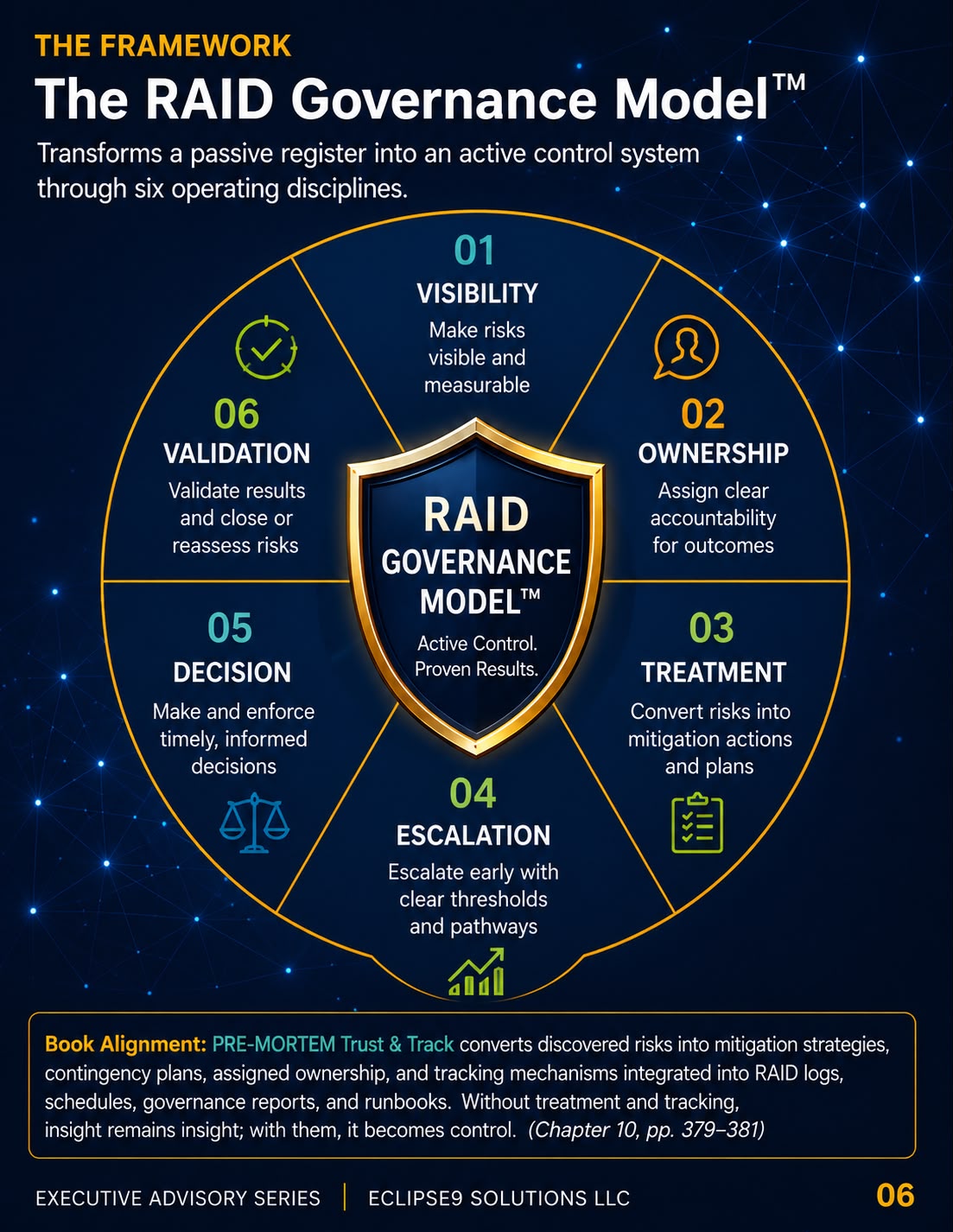
Six Operating Disciplines in Detail

Execution Framework: Five Signals That a RAID Log Is Actually Governing Risk

The Executive Control Principle
A well-structured RAID log includes the risk description, impact, mitigation strategy, owner, timeline, status, and escalation thresholds. These elements prevent risks from being merely recorded and require them to be actively governed throughout the lifecycle. (Chapter 9, p. 333)
Closing: The Watermelon Effect Is a Leadership Warning
A program can remain green on the dashboard while internally accumulating missed decisions, aging risks, unresolved dependencies, and unchallenged assumptions. By the time the external status finally turns red, the internal condition may already be bleeding.
A RAID log should reveal that condition — not conceal it. It should force ownership, accelerate decisions, and expose weakening control before weakening control becomes visible failure.

The objective is not to maintain a beautiful register. The objective is to prevent the register from becoming an archaeological record of warnings that everyone saw — but no one owned.
Framework Source and Direct Book References
Primary Source
Cloud Migration PM Bible™, Chapter 9: Risk Management and RAID Governance, pp. 326–359. This chapter establishes governance and delivery control, defines RAID categories, assigns ownership and escalation, and introduces cadence and focused risk control.
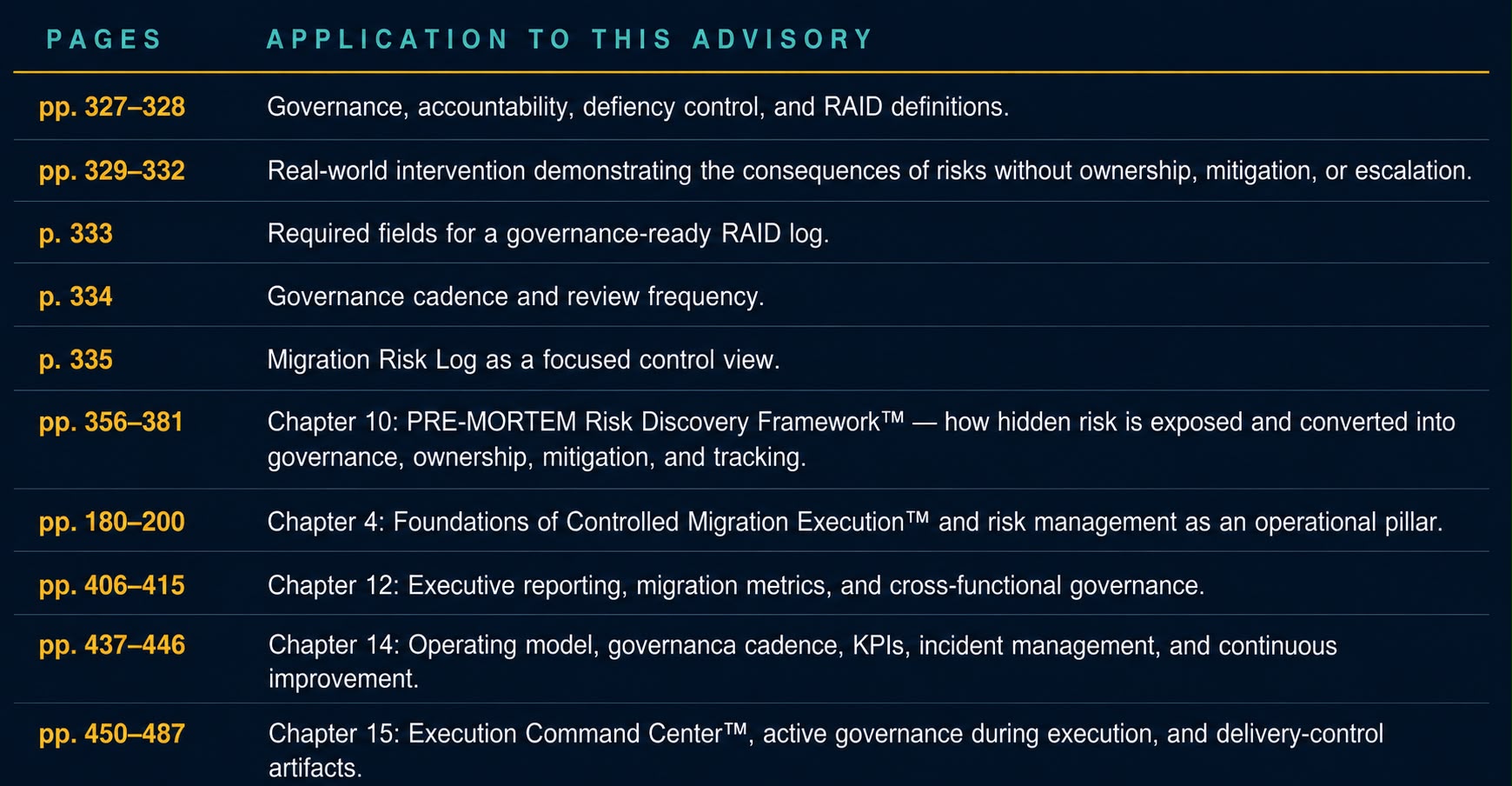
Most Directly Relevant Pages
© 2026 Cloud Migration PM Bible™ • All frameworks proprietary and reserved. • www.cloudmigrationpmplaybook.com